 Sustainability is more than an afterthought or add-on for ABET’s approach to quality assurance — it is an essential part of the mission to ensure graduates from accredited programs are prepared to excel in the workforce. As part of 2025 ABET Awards, Dr. Matthew K. Heun received the Engineering for One Planet Innovation in Sustainability Award for equipping engineers with a sustainable engineering education to address the global sustainability challenges. “Sustainability is something we’ve been conscious of for a long time — we always try to make sure we focus our discussion on in some way around the topic of sustainability,” says ABET CEO Dr. Michael K. J. Milligan.
How ABET Accreditation Supports Sustainability in Engineering
Through the accreditation process, ABET Engineering Accreditation Commission (EAC) encourages programs to integrate sustainability into engineering programs. “Higher education’s fundamental role is supporting sustainable development, and we need to help them understand how engineering can help solve the many problems facing our planet,” Dr. Milligan shares.
ABET is helping ensure sustainable engineering education is a shared global priority through strengthened relationships with international partners, such as the World Federation of Engineering Organizations (WFEO).
Recognizing Innovation: The 2025 Engineering for One Planet Award
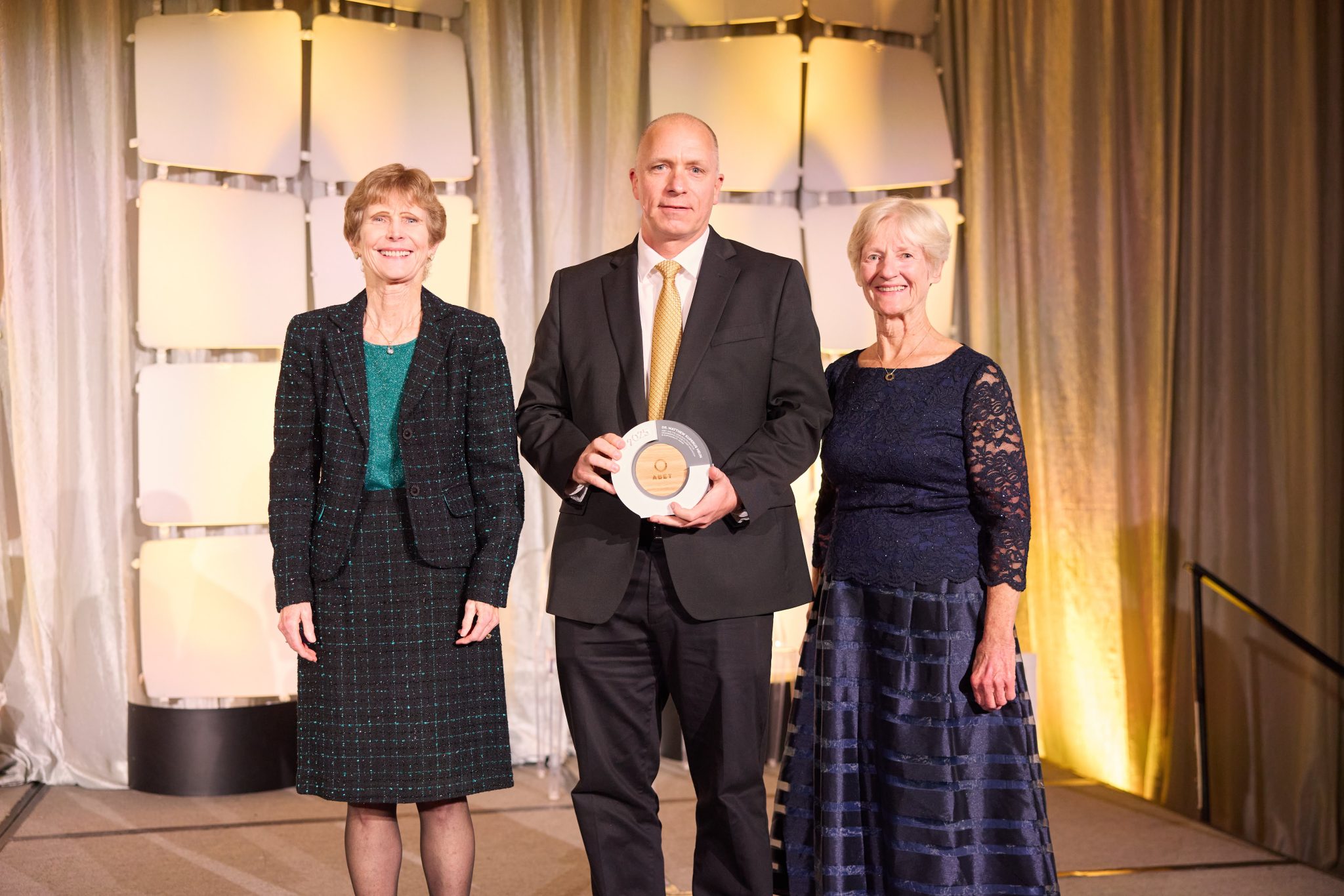
The Engineering for One Planet Innovation in Sustainability Award recognizes individuals, teams or programs that demonstrate innovation in education by implementing sustainability into EAC ABET-accredited programs. Dr. Matthew K. Heun, a professor of engineering at Calvin University, received the award at the 2025 ABET awards for his contributions to sustainability in higher education. “Calvin has a single engineering program and Dr. Heun has had a huge influence in infusing sustainability topics into the criteria,” Dr. Milligan said.
Dr. Heun receiving this award sets a meaningful example for educators, students and institutions around the globe, showing what is possible when sustainability in higher education is integral.
The Ripple Effect of Engineering for One Planet Innovation
Embedding sustainability into engineering curricula is a necessary evolution for the profession. “Science, Technology, Engineering and Mathematics (STEM) graduates will play a central role in developing solutions to many of the challenges facing society and must be equipped with the essential skills, knowledge, educational experiences and values to build a sustainable future,” Dr. Milligan says.
Programs adopting a holistic education model — one that blends technical skills with systems thinking ethics, social awareness and interdisciplinary collaboration can be profound. Students trained with environmental responsibility at the core of their studies affect engineering design and practice while influencing how industries and organizations think about energy use, efficiency and resource management. Over time, this may lead to a transformative change with measurable impact on how we build, produce and plan for the future.
A Vision for Sustainable Engineering Education
Last month, in partnership with OES, ABET launched their online sustainability microcredential to cultivate environmental responsibility and ethical awareness throughout the global STEM community. This initiative supports two of ABET’s Strategic Priorities: broadening global engagement and expanding professional offerings that go beyond accreditation to prepare learners for a rapidly evolving workforce. While this microcredential does not impact ABET accreditation, it exemplifies ABET’s mission to promote quality and innovation in education—empowering professionals to lead integrity, sustainability and purpose.
ABET’s commitment to sustainability remains steadfast through collaboration with international partners, such as WFEO. The power of engineering can shape a future that is resilient and mindful, while also solving technical challenges. Congratulations to Dr. Matthew K. Heun. His work, and all those who inspire excellence and uphold quality, are supporting a world-improving engineering profession rooted in sustainability and innovation.